

Knowledge base
Release Oct 7, 2026
September 2026 Release Notes
GEO Intelligence
Get a Clearer View of How Your Brand Competes in AI Search
What’s New
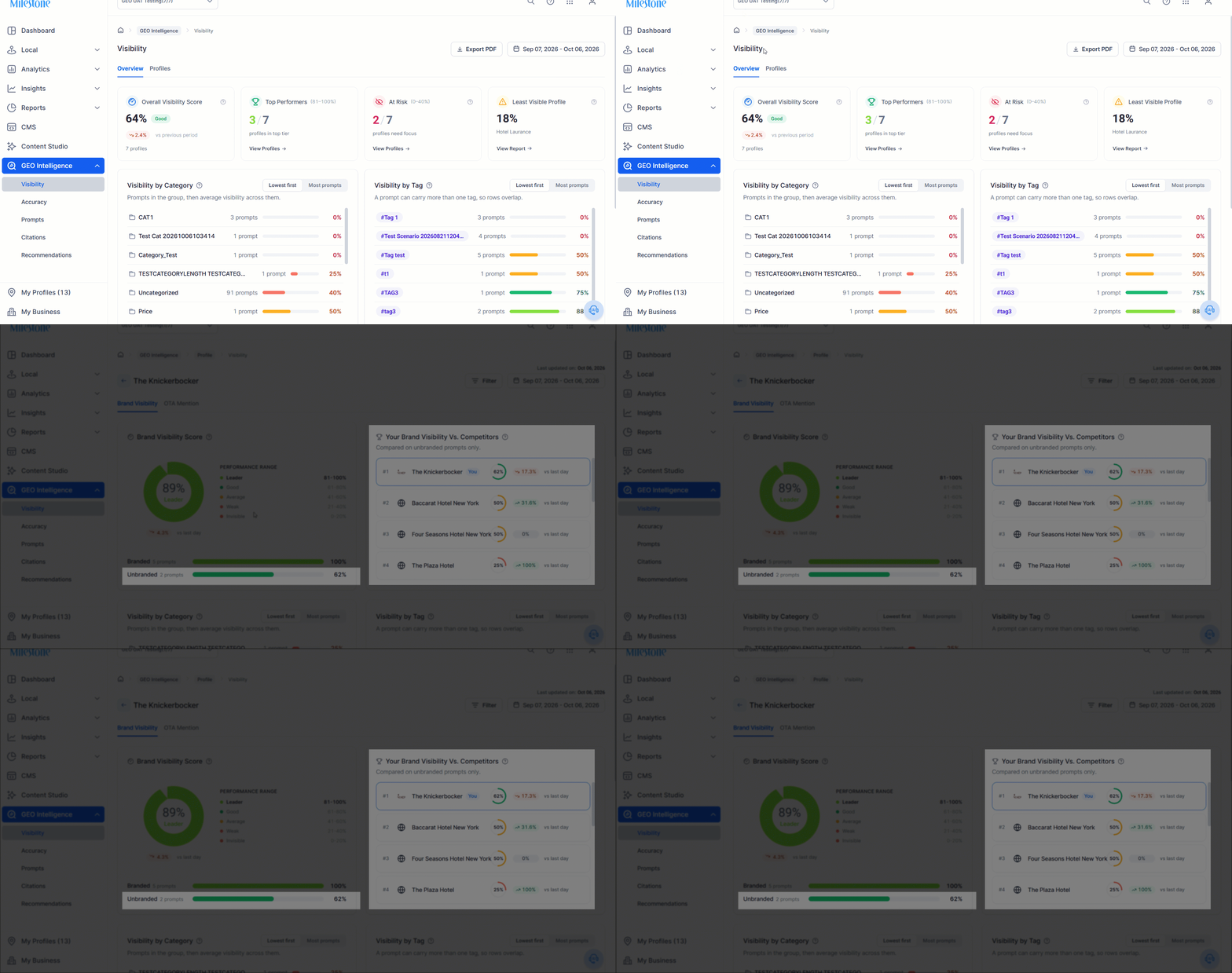
GEO Intelligence now gives you a more meaningful view of competitive AI visibility by separating branded and unbranded prompts.
The Share of Voice comparison now focuses specifically on unbranded prompts, where customers are genuinely competing for discovery. Branded prompts are shown separately so you can still understand overall visibility without allowing searches that already mention your brand to distort competitive comparisons.
Why It Matters
AI search is increasingly about discovery, not simply whether an AI engine recognizes a brand it was explicitly asked about. Google reports that people are using AI Mode for longer, more exploratory and complex queries, and that AI Mode has surpassed one billion monthly users globally.
For competitive benchmarking, branded prompts can skew the picture because your brand is more likely to appear when it is named directly. Focusing the comparison on unbranded prompts creates a fairer view of how your brand performs against competitors when AI is deciding which businesses, products, properties, or services to recommend.
This makes Share of Voice a more meaningful measure of true competitive visibility in AI search.
What’s Next
GEO Intelligence will continue moving from simply measuring visibility toward helping teams prioritize where to act. Upcoming roadmap capabilities will incorporate real search demand into prompt prioritization, helping teams focus on AI queries with the greatest potential business impact.
CMS
Build and Update Digital Experiences With Less Developer Dependency
What’s New
Page Studio is getting more no-code controls so content and marketing teams can make common page changes without rebuilding components or relying on development teams.
New capabilities include:
- Predefined layouts for supported form components
- Embedded content such as videos
- Flexible links to pages, page sections, navigation, and external destinations
- Desktop and mobile responsive previews and controls
Instead of manually rebuilding standard experiences, teams can select the layout or element they need and make changes directly in Page Studio.
Why It Matters
As websites increasingly serve both people and AI systems, teams need to move faster without sacrificing consistency or structure.
Milestone’s roadmap is evolving the website into an AI-ready experience that supports human visitors while remaining understandable and actionable for AI engines and agents. At the same time, marketing teams need the ability to respond quickly to campaigns, customer needs, and emerging search opportunities without waiting for development cycles.
No-code page controls help reduce that operational friction, shortening the path from an idea or opportunity to a live digital experience. The roadmap specifically positions no-code component and page building as a way to significantly reduce page and campaign launch times.
What’s Next
No-code controls will continue expanding beyond the initial supported components, giving teams greater control over page layouts and components directly within Page Studio. Further ahead, the roadmap moves toward an AI-assisted Experience Builder that can assemble and refine page experiences conversationally.
CMS
Deliver More Consistent Experiences Across Languages
What’s New
AI Translation now covers additional parts of the customer journey that previously remained in the site's primary language.
Booking reminder experiences, including customer emails, and site abandonment messaging can now be translated into the configured language of the visitor experience. For example, someone browsing a Spanish version of a site can receive the associated reminder communication in Spanish rather than falling back to English.
Why It Matters
A multilingual customer journey should not stop at the webpage.
Search itself is becoming increasingly multilingual. Google has continued expanding AI-powered Search experiences across languages, with its AI systems designed to understand locally relevant information rather than simply translate words from one language to another.
Consistent language coverage across pages, messages, emails, and conversion experiences helps brands maintain context from discovery through action.
It also supports Milestone’s roadmap objective of 100% AI Translation Coverage, extending automated translation across pages, events, FAQs, forms, dynamic experiences, and other website content.
What’s Next
The broader translation workflow is being reviewed to ensure coverage extends consistently across the CMS, including pages, widgets, emails, notifications, and other customer-facing experiences. The transcript specifically identifies this full-CMS coverage as the intended direction. Sprint Demo - CMS, MPC, Local,G… Sprint Demo - CMS, MPC, Local,G…
The roadmap also extends this work through Safe Sync and optimized translation workflows, designed to keep localized sites aligned while protecting local edits and making large-scale translation management faster.
CMS
Keep Event Experiences Accurate and Consistent
What’s New
Event Calendar now includes additional validation to prevent common publishing errors.
Activities can no longer be scheduled outside the date range of their parent event, and duplicate activities with the same identifying information are prevented from being created. These safeguards will be available across customers using the capability.
Why It Matters
Accurate event information matters wherever that content appears, from your website to search experiences and AI-generated answers.
Preventing conflicting dates and duplicate event information improves the quality of the underlying content that customers, search engines, and AI systems rely on. As AI-powered discovery increasingly synthesizes information rather than simply returning individual webpages, maintaining consistent source information becomes even more important.
What’s Next
Milestone will continue strengthening self-service content management and governance across Page Studio, helping teams manage website experiences with fewer manual checks and less dependency on technical teams. This direction supports the roadmap’s broader focus on user-driven workflows, faster time-to-market, and centrally governed website experiences.
Was this article helpful?
That’s Great!
Thank you for your feedback
Sorry! We couldn't be helpful
Thank you for your feedback
Feedback sent
We appreciate your effort and will try to fix the article